




Swollen Feet & Ankles

Swollen feet and ankles are widespread, especially among those with sedentary lifestyles or who stand for long hours. This condition is linked to poor circulation and can be uncomfortable.

Free_Delivery

Free Delivery & Online Returns

Money_Back

90-Day Money-Back Guarantee

Warranty

Free Extended Warranty

Load video:

🔷What is Swollen Feet & Ankles?

Swelling in the feet or ankles is often caused by reduced circulation or long periods of inactivity. Fluid collects when the body isn’t effectively pumping blood and lymph upward toward the heart.

🔷Why It Happens

Swollen feet and ankles, medically calledperipheral edema, occur when excess fluid builds up in the tissues of the lower limbs. The causes range from mild, temporary issues to underlying medical conditions.

Common causes of Swollen Feet & Ankles
causes_foot

Prolonged Sitting or Standing

Long periods of inactivity, such as sitting or standing, can cause blood to pool in the lower limbs, leading to swelling and discomfort.

causes_age

Age-Related Circulation Decline

As we age, circulation naturally slows, making it harder for the body to move fluid efficiently, resulting inswollen feetandankles.

causes_snake

Limited Physical Activity

A sedentary lifestyle weakens the muscles responsible for moving fluid through the legs, causingfluid retentionand the feeling of heavy, swollen feet.

Swollen_Feet_Ankles_feels

🔷How It Feels

People often report:

 ▪ Puffy or swollen feet
 ▪ Indent marks from socks
 ▪ Tightness around the ankles
 ▪ Evening swelling
 ▪ Discomfort after long days

Free_Delivery

Free Delivery & Online Returns

Money_Back

90-Day Money-Back Guarantee

Warranty

Free Extended Warranty

🔷The support you can get

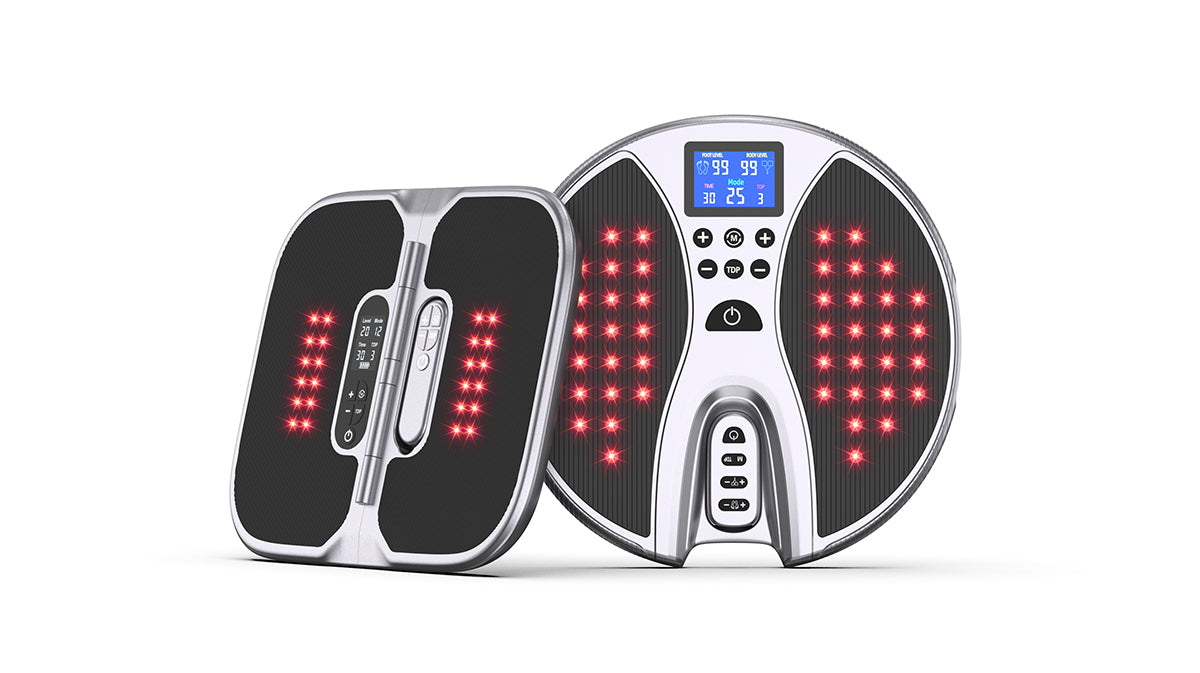
Welliawell targets swelling and promotes healthy circulation using EMS, infrared heat, and micro-circulation technology:

 ✔ Encourages natural fluid drainage
 ✔ Reduces swelling caused by inactivity
 ✔ Helps legs feel lighter & more mobile
 ✔ Promotes micro-circulation

With regular use, Welliawell effectively reduces swollen feet and ankles, bringing much-needed relief after a long day of sitting or standing.

See your Doctor if your symptoms persist.

Clinical recommendations

My name is Michael A. Nguyen, MD. I’m a board-certified physician based in Portland, Oregon, and I routinely counsel patients who notice swelling in their feet and ankles—especially by the end of the day, after long sitting, standing, or travel.

Swollen feet and ankles are often a form of edema, meaning fluid is accumulating in the soft tissues. In many cases, it can be linked to gravity, prolonged immobility, higher salt intake, certain medications, or reduced calf-muscle “pump” activity that normally helps move blood and fluid back up the legs. Mayo Clinic describes edema as fluid trapped in tissues, commonly affecting the legs and feet, and notes that compression and sodium reduction may help in milder cases. Mayo Clinic+1

But clinically, swelling is also a screening symptom—because sometimes it signals a more serious condition. If swelling is sudden, severe, one-sided, or the area is red, hot, very painful, or associated with fever, that warrants urgent medical evaluation. nhs.uk+1

We also take blood clot risk seriously: the CDC notes typical DVT signs can include leg swelling, pain or tenderness, warmth, and redness/discoloration, and pulmonary embolism may present with unexplained shortness of breath or chest pain. CDC+1

Finally, systemic causes matter—heart conditions can lead to fluid buildup and swelling in the legs and ankles, which the American Heart Association highlights as a symptom pattern to watch. www.heart.org

For patients who have been evaluated and are appropriate for conservative care, the core home strategy is simple: elevate, move, and support circulation. The NHS specifically recommends raising the legs and doing gentle exercise like walking to help blood flow. nhs.uk

If travel is a trigger, the CDC advises moving the legs frequently and doing calf and ankle exercises during long trips. CDC+1

This is where Welliawell may be a helpful adjunct for some individuals. Their foot-based neuromuscular stimulation and infrared warming approach can support calf activation, encourage a more “active” lower-leg response during sedentary periods, and add comfortable warmth that some patients find improves their day-to-day symptoms. I view this as a support tool—not a cure—and I typically recommend it alongside a structured plan: regular movement breaks, ankle mobility, elevation, and clinician-guided compression when appropriate.

In summary: swollen feet and ankles are common, but they should be taken seriously. With proper screening and a consistent home plan, many people can reduce swelling, stay more comfortable, and protect long-term mobility—with Welliawell as a practical supportive option when clinically appropriate.

Thank you.

Michael A. Nguyen, MD
Board-Certified Physician
Portland, Oregon, USA

✔ Check out how its work

Reviews from Real Users

I sit at a desk most of the day, and by late afternoon my ankles look puffy and my shoes feel tighter. I wanted something I could do at home that felt more targeted than just “put your feet up.” I started using WELLIAWELL in the evening while I’m watching TV—usually 15–20 minutes.

Beginner tip: I made the mistake of starting too strong the first time. What worked best was choosing a gentler mode and keeping the intensity around Level 8–12 for the first few sessions. After a week, I slowly increased to the mid-teens on days when my legs felt heavier. If the stimulation ever feels sharp or uncomfortable, I dial it back immediately.

The infrared warmth is the part I love most—it feels steady and helps my feet feel less stiff. The EMS sensation feels like my muscles are “waking up,” which is nice after sitting all day. I still do the basics—water, short walks, and elevating my legs—but WELLIAWELL has become my “end-of-day reset” that helps my feet and ankles feel more comfortable.

I work at a desk all day, and by evening my ankles look puffy and my feet feel tight in my shoes. I bought WELLIAWELL because I wanted something I could use consistently at home without a complicated setup—and it really fits that role.

What I love is how adjustable it is without feeling intimidating. There are 25 modes and 1–99 intensity levels, but the big backlit screen makes it easy to see what you’re doing, even at night. The infrared remote is also surprisingly useful—I can change settings without bending forward.

Beginner tip (how I started):

  • Heat: I started at Infrared Level 1 for the first few sessions.
  • Mode: I picked a gentler “steady” feeling mode (not the punchy ones).
  • Intensity: I stayed around Level 10–15 at first. If it ever felt sharp, I dropped it immediately.

The medical-grade soft silicone foot pad feels comfortable and grippy (not like plastic), and the 30° adjustable angle is honestly a great design—when my ankles are swollen, a slightly raised angle feels more natural on my legs.

I also appreciate the 30-minute auto stop because it prevents overdoing it when I’m tired. After a session, my feet feel less “stuffy” and more comfortable, especially before bed.

⏮ Back to all symptoms